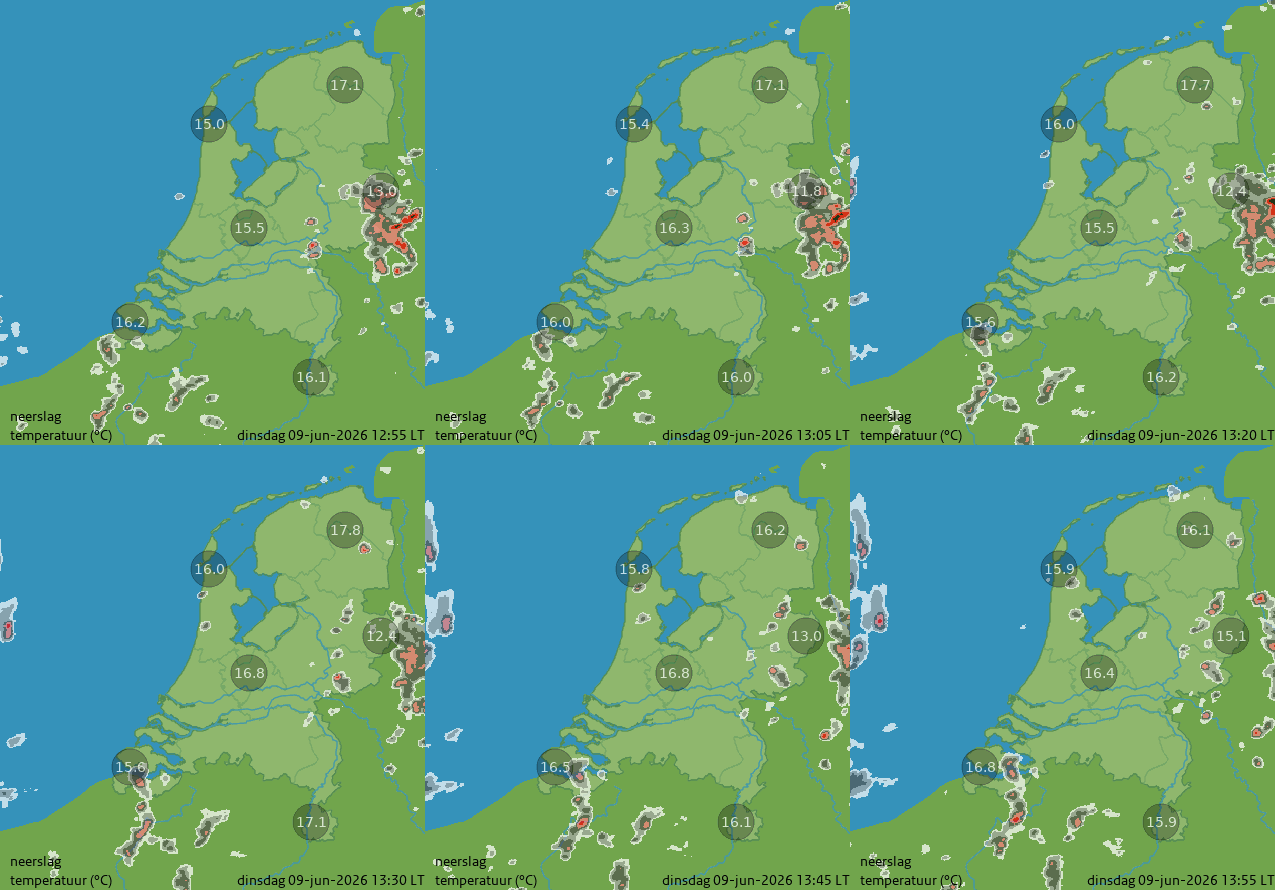


 Precipitation forecast for the coming hours
About precipitation radar
Weather radar works by sending pulses of microwave energy into the atmosphere. When these pulses hit precipitation (rain, snow, hail), part of the energy is scattered back to the radar. Reflectivity measures how much energy returns and depends on the size, shape, and type of precipitation. It is expressed in decibels relative to Z (dBZ); higher values indicate stronger returns and typically heavier precipitation (NOAA JetStream; WMO).
The radar transmitter emits short, powerful bursts; only a small fraction of the energy returns to the receiver, so the signal is amplified before processing. Reflectivity is one of the main products from Doppler weather radars and is widely used by forecasters to see where precipitation is and to identify storm features such as hook echoes (rotation), bow echoes (damaging winds), and training echoes (flash flood potential) (NOAA; NWS Training).
Weather radars operate in different frequency bands. S-band (e.g. 10 cm wavelength) is less affected by attenuation and is well suited for heavy precipitation. National meteorological services use networks of radars to cover their regions; the maps above use data from such networks (e.g. KNMI, RainViewer). WMO publishes guidance on operational weather radar best practices.